
Case study/Custom software/Dixon, California
How Discount Depot Auctions Got a Custom Platform Built for Their Business.
Recurring third-party software fees and limited flexibility led Discount Depot Auctions to consider a different approach. AI Deployment Partner built a platform around their actual operation.
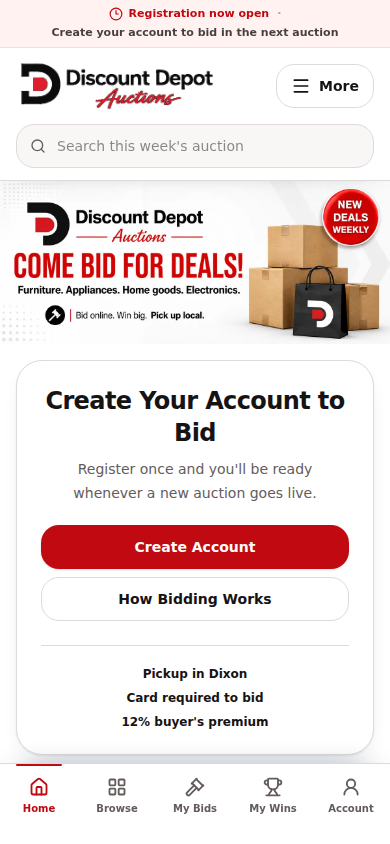
Actual mobile website capture
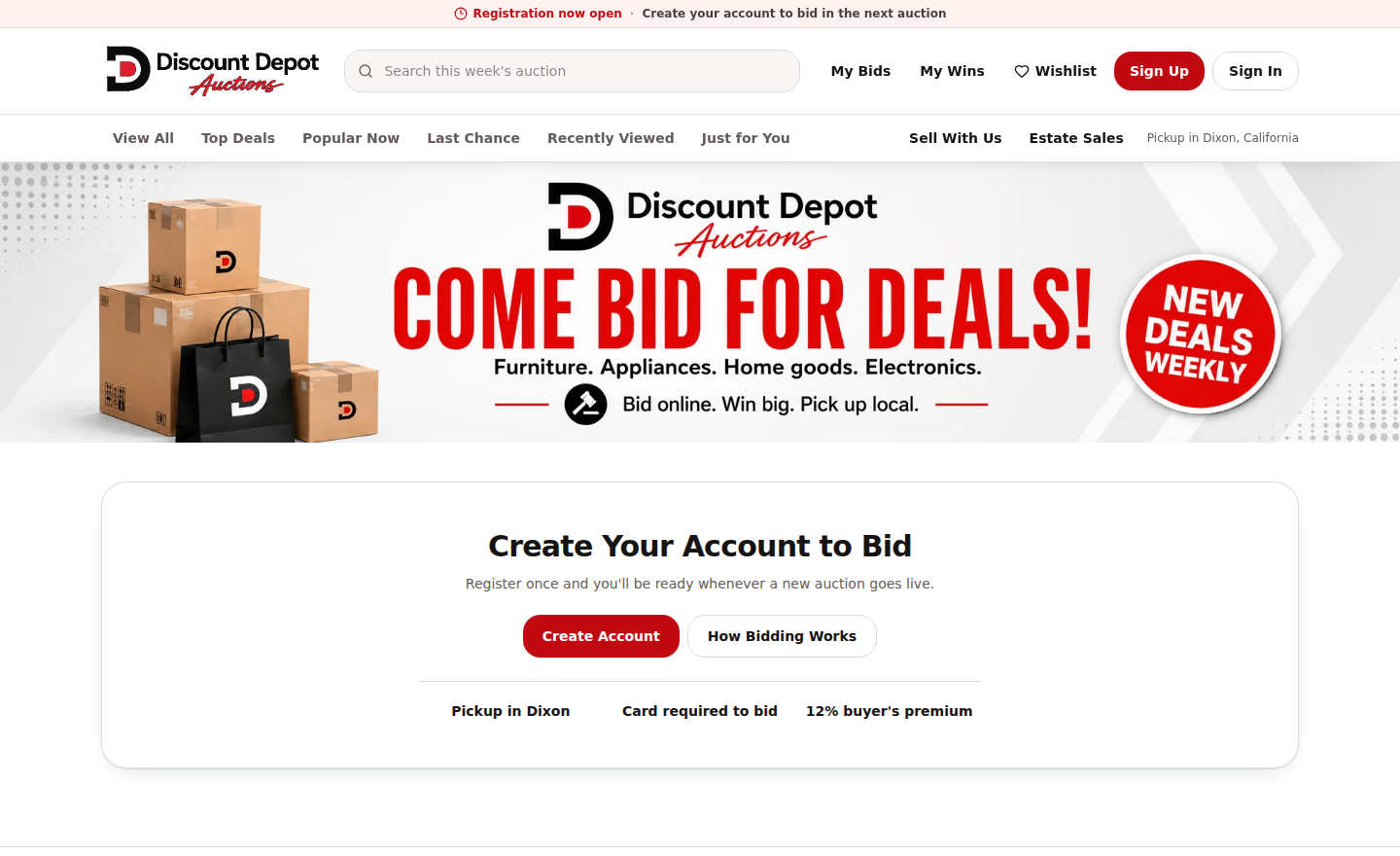
Actual public website capture. No private business data.
Less dependence on outside software
More control over the tools the business relies on.
Built around their workflow
The system follows the way Discount Depot runs auctions.
Room to keep improving
Features and priorities can evolve with the operation.
A smoother working process
Customer and back-office tools are designed together.
Before
Third-party auction software
- −Recurring software and usage costs
- −Limits on customizing the workflow
- −Dependence on an outside provider's priorities
After
A system built for Discount Depot
- Software tailored to the auction operation
- Direct control over features and improvements
- Catalog, bidding and back-office tools working together
Our AI audit and development work
AI opportunity audit, AI search visibility audit, and custom software development.
Our work with Discount Depot Auctions included an AI opportunity audit to examine business processes and where automation or custom software could help. We also conducted an AI search visibility audit to review how the business could be discovered through Google and AI-powered search experiences. These were separate parts of our work, alongside building the auction platform.
AI opportunity audit
We reviewed operational workflows and opportunities for business automation, integrations and custom software.
Explore AI opportunity auditsAI search visibility audit
We reviewed the business's discoverability in search and AI search experiences as part of its online visibility work.
AI-assisted software development
We used AI development tools alongside engineering and testing to build the working auction platform around its business needs.
Why the change mattered
The challenge went beyond the monthly software bill.
Auction software sits in the middle of the entire business. Customers browse lots and bid, while staff create listings, oversee the close, prepare invoices and coordinate pickup. A limitation in one part of that process can create extra work somewhere else.
For Discount Depot, the decision was whether to keep adapting the operation to a third-party platform or build a system around the steps the team actually uses. Recurring costs were one reason to reconsider the setup. Control over those everyday workflows was another.
For customers
Make bidding straightforward.
Visitors need a clear catalog, an account and a predictable way to bid, review their wins and understand what happens next.
For the auction
Keep the close dependable.
Timed bidding needs consistent rules for lot closing, late bids and the final winning result. A visual countdown alone is not enough.
For the staff
Keep work moving after the sale.
The winning record should carry through to the invoice and pickup workflow without staff having to reconstruct what happened.
The solution
A custom auction platform built around their business.
The work covered much more than a public website. The team behind AI Deployment Partner used AI-assisted development and custom software engineering to build an auction platform that brings product listings, buyer activity, auction closing and the staff's post-sale work into one connected system.
That meant treating auction rules and record keeping as part of the product, not separate tasks left for employees to reconcile. It also gave the business a direct path to improve features as its needs change.
Book Free AI Audit
From catalog to customer pickup.
Four connected parts of one auction operation.
01
List inventory
Lots, details and photos
02
Run the auction
Bids and closing rules
03
Process invoices
Winner and payment records
04
Handle pickup
Final customer handoff
Workflow illustration based on the implemented system, not a screenshot of private operations.
Item listings
Organize products, lot information, photos and categories.
Bidding system
Online bidding with controlled auction timing and close rules.
Invoices and payments
Move from auction results to winner records and invoicing.
Pickup management
Support the handoff after an auction closes.
The implementation
Building an auction system that works when people use it.
The public storefront is only the visible part. We used AI-assisted software development alongside hands-on engineering, workflow planning and testing. The important decisions were about making the auction rules and the office workflow work together.
Organize the catalog before bidding begins
Staff need to prepare lots with descriptions, images and the right auction information. Buyers then need to find those items and understand the conditions before placing a bid. The platform was structured for both sides of that work.
Keep the bidding rules on the server
A real auction cannot rely on the buyer's browser to determine a winner. The system uses authoritative bidding and closing logic, including proxy bidding, staggered lot closing and extensions for qualifying late bids. Those rules are protected separately from the visual interface.
Carry accurate results into invoicing
When bidding closes, the winning information needs to be consistent with the recorded bids and the invoice that follows. The software links auction finalization and winner records instead of leaving staff to piece results together from different systems.
Make continued improvements possible
The business has a software foundation it can adjust as operating requirements change. That means changes can be planned around actual customer and staff needs rather than waiting for a vendor to add a feature.
The working result
Discount Depot now operates its own public auction website with customer registration, bidding and supporting business workflows. It is a working product, not simply a mockup or a proposed application.
What other businesses can learn
Your software should fit your business.
For a company that has outgrown its software, a better answer might be connecting existing tools, changing a process or building a custom platform. It depends on what the work requires and the true cost of each option.
The useful question is where the current system stops fitting the operation. Look at subscription and usage costs, how often employees need workarounds, how easily the software can change, and who is responsible for running it long term.
A custom build still needs maintenance and ongoing support. It becomes a sensible option when the control and workflow fit are worth that responsibility. An AI opportunity audit can help identify where AI, business process automation, integrations or custom software development would actually improve operations. The same decision applies to service companies, distributors, field teams and other businesses with specialized processes.
Visit Discount Depot AuctionsBuilt for the way you work
Paying for software that doesn't fit?
Let's see whether an integration, a workflow improvement or a custom application makes sense for your business.